

The Preamble
If you want the long version of how I got here – from childhood obsessions to full-blown comic completism – I wrote a whole thing about it: Marvel’s First Family: My Fantastic Four Journey Before First Steps. But the short of it is this: I’ve read almost every major Fantastic Four run. I know these four like family, and I know the strange, expansive universe they inhabit like it’s my backyard. So when I say that Fantastic Four: First Steps might be the best live-action FF adaptation we’ve ever gotten, I say it with full awareness of what that implies – and I’m even more aware that it isn’t saying that much.
I should probably address the cinematic baggage that came before. The original ’90s movie was really bad – cheesy, low-budget, and exactly the kind of thing you’d expect from a Roger Corman production. The two early 2000s films had their moments, sure, but they never quite found the right tone. Doom, in particular, was badly mishandled in the first iteration. Rise of the Silver Surfer attempted a course correction on Doom but did so while simultaneously butchering Galactus, turning him into a literal cloud of disappointment. And as bad as the ’90s movie was, it still managed to be leaps and bounds better than Fan4stic, a film that felt like a two-hour trailer for a sequel we were mercifully spared from ever receiving.

GET TO THE REVIEW!!!
More than any previous attempt, First Steps captures what makes the Fantastic Four endure. It’s not just the powers – though those are on full display, handled with confidence and creativity. It’s the familial tension, the cosmic awe, the cheesy optimism, and that strange, beautiful blend of intellect, arrogance, and heart that defines Marvel’s first family. This film understands the team not just as superheroes, but as people bound together by love, rivalry, regret, and ambition. There’s a care taken to deeply understand what makes this intrepid group of imaginauts work, and that understanding shines through in a way that’s both apt and succinct.
The movie opens with Reed Richards already deep into dimension-bending science, with Sue Storm – equal parts brilliant and emotionally grounded – as his partner and anchor. Johnny Storm brings heat in more ways than one, a chaotic spark that lights up every room (and sky) he’s in. And Ben Grimm – oh, Ben – he’s as tragic and lovable as he needs to be. The experiment that binds them into a team also fractures time in a very literal way: the narrative flashes forward with surprising urgency, covering years in the span of moments. The pacing might feel jarring to some, but it’s clear the filmmakers made a deliberate choice. This isn’t just an origin story; it’s a chronicle. The film feels like a scrapbook come to life, vignettes of a family’s growth against a cosmic backdrop.
That decision comes with trade-offs. While we’re spared a lengthy retread of the origin we’ve seen multiple times before (no more botched space flights or mysterious cosmic rays, thank god), we also miss some of the intimacy that slower scenes could’ve offered. There are moments – particularly with Reed and Sue’s child – that deserve a pause, a breath. The speed with which the film moves might leave some viewers feeling more like observers than participants. It flirts with the tone of a dramatized documentary, and while that’s not inherently a flaw, it does create distance.
What breaks through that distance, though, are the character dynamics. Every interaction between the Four feels lived-in and genuine. Whether it’s Johnny and Ben’s bickering, Sue and Reed’s quiet moments of connection and conflict, or the family’s collective response to cosmic threats, the emotional throughline is strong. These are not just archetypes. They’re people.

Visually, the film leans hard into retro-futurism, evoking a bright, sanitized version of the future that never was. It’s a smart aesthetic for a team that’s always been a little out of step with the rest of Marvel’s grit and gloom. And because this isn’t technically set in the primary MCU (yet), the film gets to play in a nearly utopian world where the Fantastic Four are the only heroes around. That solitude works to the film’s favor in some ways – it lets them stand out, but it also makes their world feel a little too small.
This is perhaps where my biggest critique lies. Part of what makes the Fantastic Four universe so rich is the extended cast. The Four don’t exist in a vacuum; they bounce off an enormous supporting world of friends, rivals, weirdos, and gods. There’s a reason Spider-Man and Johnny are best buds. There’s a reason The Watcher warns them when the cosmos is in danger. There’s a reason Crystal of the Inhumans became a staple part of their dynamic. The movie nods toward this – mentioning Puppet Master, featuring a delightfully oddball Mole Man – but I found myself yearning for more. Where’s Alicia Masters? Why not start teasing the New Fantastic Four? Even Valeria’s absence, understandable as it may be, is felt.
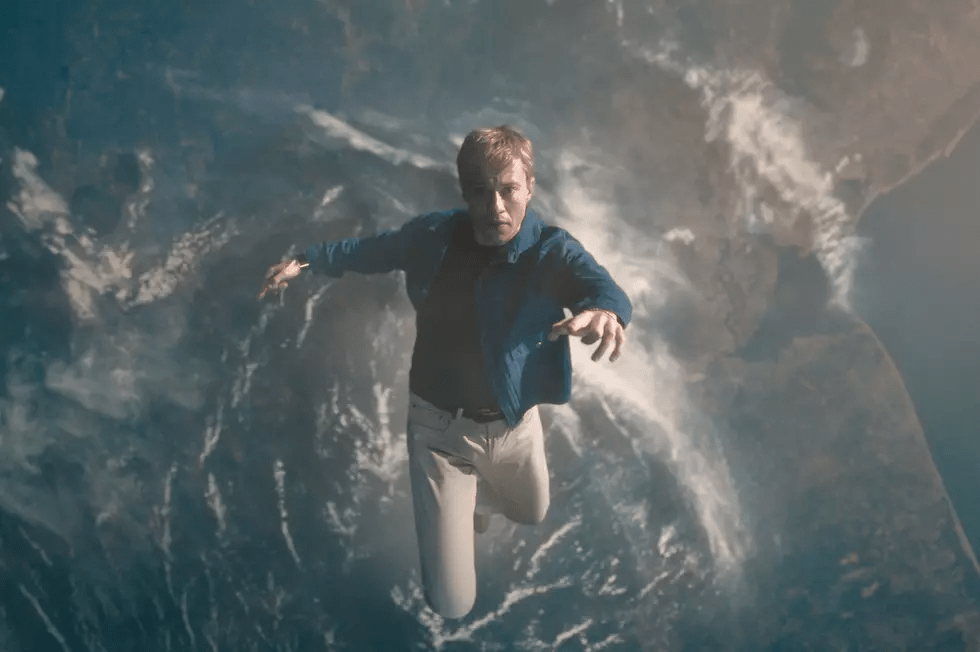
One major change did work wonders though: making the Silver Surfer a woman – specifically Shalla-Bal, instead of Norrin Radd. As a longtime fan of Radd, I admit I bristled at first. Silver Surfer was my favorite hero before I truly became a comic reader, the way some kids attach to a character based on a single awe-inspiring comic cover. But the change is brilliant. Shalla-Bal adds dimension to Johnny’s arc in a way Radd never could, and her sorrowful, graceful introduction of Galactus sets a tone of mythic gravity. Still… I can’t help but hope the 616 MCU still has a Norrin Radd waiting in the wings. Imagine Johnny, now familiar with Shalla, rocketing into space to greet her – only to meet a bald, silver dude instead. Perfection.
As for Galactus himself? He is grand. Towering. He feels like a threat of cosmic scale, not just in size but in presence. There’s a moment (no spoilers) where he’s briefly too vulnerable for my taste, but it’s forgivable. The rest of the portrayal is pitch-perfect. He’s not just a force of destruction; he’s a being of existential weight. And seeing him rendered so lovingly – purple armor, impossible dimensions and all – was like watching a Jack Kirby panel come alive.

CGI throughout the film is impressively handled. Grimm and Johnny, two characters often doomed to uncanny effects work, look and feel surprisingly real. Only the Richards baby veers into awkward territory, occasionally dipping into that digital doll look that breaks immersion. But compared to past attempts, this is a major leap forward.
And perhaps the boldest, most refreshing decision of all: Doom is nowhere to be found (…well). Finally. For once, the Fantastic Four get to be their own story without Victor Von Doom looming over them from the start. Save him for the sequel. Let him emerge when the team – and the audience – has found their rhythm.
Fantastic Four: First Steps doesn’t try to be the MCU’s next billion-dollar blockbuster. It doesn’t shoehorn itself into crossover setups or franchise mandates. Instead, it’s a bold, slightly messy, deeply sincere attempt to capture the spirit of Marvel’s strangest, most lovable team. It’s retro without being ironic, emotional without being saccharine, and grand without losing sight of the people at its core.
It’s not perfect. But it’s right. And for fans like me, that’s more than enough.
Nitpicks from a Lifelong Nerd
Look, I’m a nerd. I will always be a nerd. That means I will always have nitpicks – no matter how much I love the thing. These aren’t meant to undercut the joy this movie gave me. They’re just the kind of obsessive observations that come with a lifetime of comic book fandom. So take them with a grain of unstable molecules.
- I understand that this is a Grimm who has largely made peace with his transformation, but I would’ve liked just a touch more anger toward Reed. That tension – so central in the early days of the comic – needs to be earned through the story. Skipping the origin is fine. Skipping emotional payoffs? Less so.
- Reed’s stretching powers are far too tame. Turn yourself into a ball or a parachute at least once! This is a guy whose body defies physics; give me a moment or two of weirdness. You don’t need to go full Chuck Jones, but the potential is there – use it!
- I still miss Norrin Radd. Give me both Surfers. Let Radd show up as a mirror to her journey. There could even be a plot point of Norrin having a Shalla at home in her 616 world whereas this other Shalla from Earth… uh, 834? (I don’t remember the number!) Somehow also exists here!
- The rushed origin works… but also doesn’t. It’s a blessing that we don’t dwell on cosmic rays again, but the speed with which we move past those formative moments might’ve left newer viewers in the dust.
- Galactus, at one point, feels a bit too vulnerable. I know, story beats and momentum, but still – it’s Galactus. EDIT: I’ve been thought about his a lot overnight and have come to the conclusion that I’m okay with how this played out. Without being spoiler heavy I thought about the breadth of things I witnessed regarding the characters in question and have come to the conclusion that it’s totally plausible for this scene to occur!
- There’s so much more I want from this universe. That’s not a complaint about the movie – it’s a compliment disguised as one. This feels like the start of something big. I just hope it leads to something even better.
What did you think of First Steps?
Did the movie work for you? Are you hoping for more crossovers in the sequel? Drop your thoughts in the comments – I’d love to hear from fellow fans, nitpicks and all.


 Ginothy Tonic
Leave a reply to Dan Askew Cancel reply