
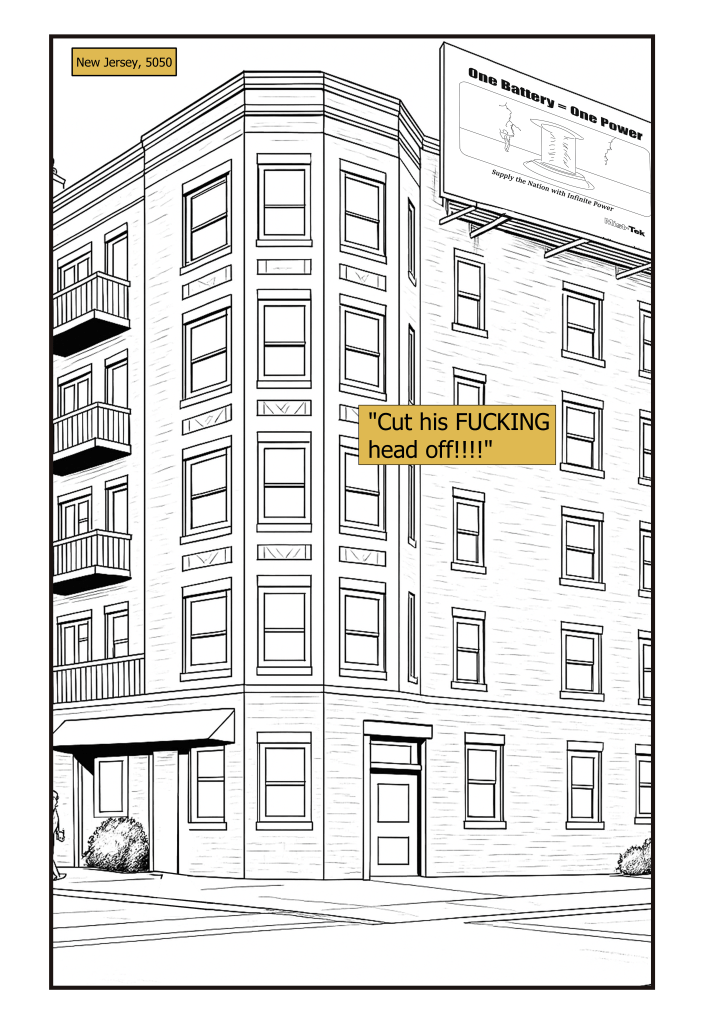
Well hello there. It’s been a while. Three months may as well be a geologic epoch in internet years. I’m sure the three of you refreshing for some more Godzilla talk were deeply disappointed. So where have I been?
Life. Not the dramatic kind—just the slow, real one. The grind of my day job. The creeping invasion of lawn work. Vet visits for my sick cat. Playing games. Hanging with my dog. Cleaning. Messing up cleaning. Redoing cleaning. Also, a whole lot of drawing, redrawing, cursing, and drawing again. That’s where.
That’s right. I’ve truly gotten to a place where I can start talking about the big project I’ve been investing most of my life into – outside of other, probably more important, life things. It has been years of slow and arduous work that ramped up until it hit the needed fever pitch where I began blasting out creativity like a caffeinated jackrabbit with a deadline.
And yes, I procrastinated writing this article to finish the comic—and now I’m procrastinating finishing the comic by writing this article. Circle of life.
The Grind Ekes on
I’ve finally battened down the hatches and continued, albeit with far more fervor, truly cranking out my comic. This entails my least favorite part of the process: Drawing. Sadly, having a lack of fungible funding (mysterious benefactor applications are still open, by the way!) means I am still tasked with drawing this first issue. That’s just the reality.
So I’ve been using Clip Studio Paint Pro, banging my head against digital brushes and layers, slowly but surely crawling toward a finished product. It’s clunky. It’s frustrating. But it’s working. Kind of.
Over time—and through sheer repetition—I’ve gotten a bit better. More confident. I still vastly prefer writing, but I’ve made peace with the process. It’s like housework: you don’t want to do it, but it feels good when it’s done.
Worldbuilding my way out of Writing
The concept for Omega Children was born in 2014, during long walks on lunch breaks while I worked at FYE in the Vancouver Mall. I was toying with ideas, remembering the game Legend of Legaia and its mist-turns-you-into-a-monster mechanic. Funny how some ideas just linger—floating dust in your head until one, like a god, plucks it from the void and pushes it forward (I just compared myself to god). I liked this idea of building societies around a harrowing ordeal, especially one as pervasive as what is supposed to be a natural phenomena suddenly becoming pushed to the forefront of one’s thoughts. I began building a world around it, except in a more modern, grounded, and eventually terrifying setting.
Worldbuilding has always been my favorite part of storytelling. I love constructing internal logic and reworking genre rules. I’ve built out entire settings for stories I never even wrote—because the fun, the satisfaction, was in imagining how everything fits together. I once tried worldbuilding Mario lore, when I was brainstorming a gritty Mario comic (don’t laugh—it almost worked). I’ve tried to make sense of Dino Riders, crafting a cohesive universe where none existed. I still think I might return to both those ideas one day—though obviously, the IP ownership makes that… complicated. The Mario one would have to go full parody. Dino Riders might work with just renamed characters—unless I ever become famous enough to pitch it IDW-style.
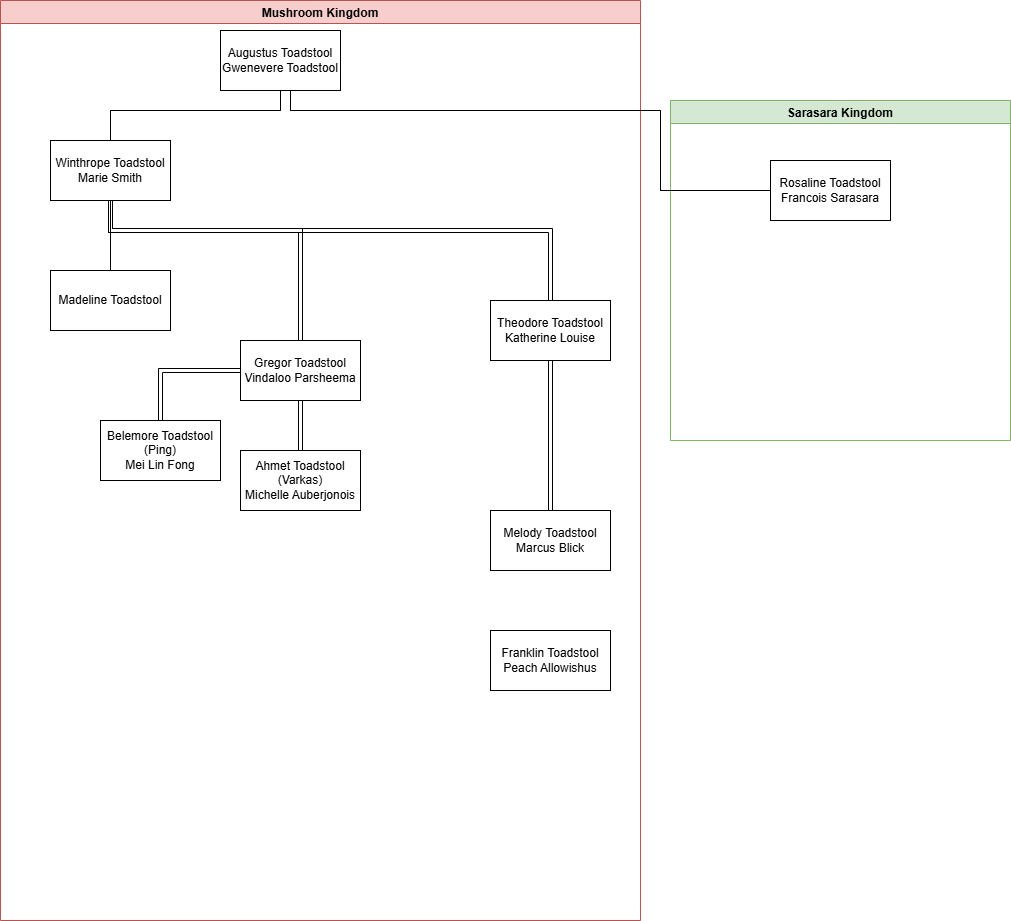
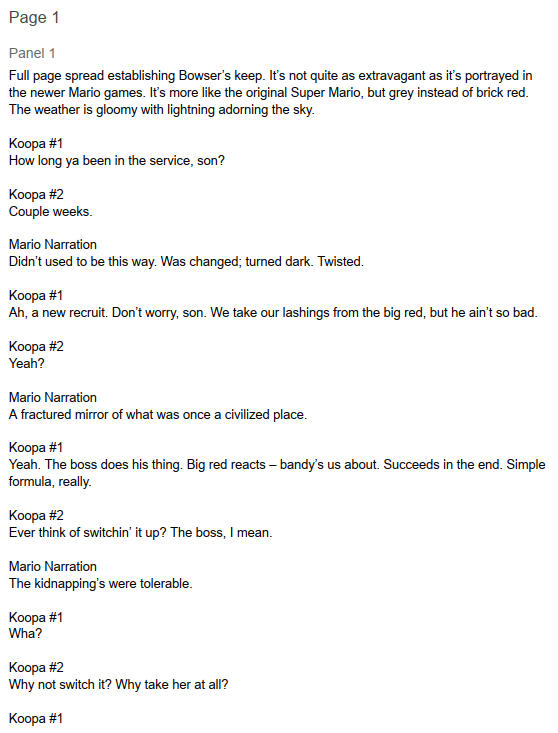
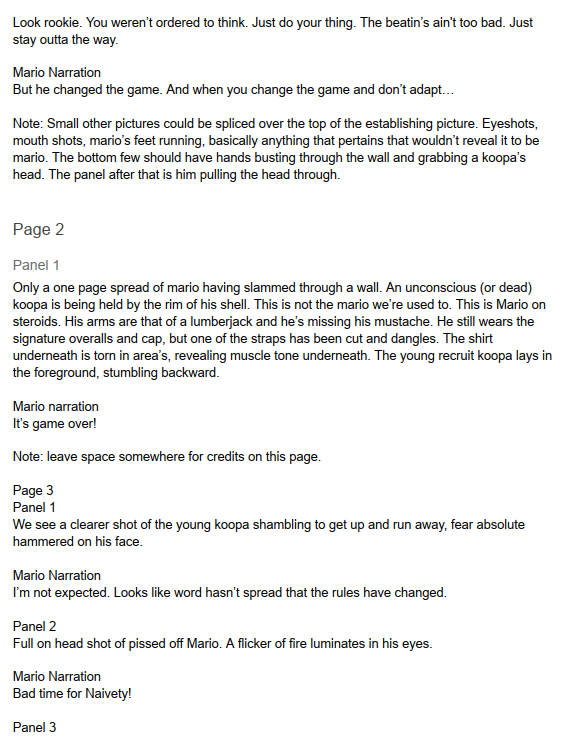
Then there’s Calamity Dusk, my homegrown video game concept that started as a DIY Final Fantasy. Or Final Bastion, where you don’t even learn you’re not on Earth until 50 issues in—and Earth is the villain. I once built an entire world for a school project – fully plotted, deeply thought-out – boiled down to a couple bullet points in a presentation. I’ve imagined a Metroid-style game, a brutally hard childhood-errand simulator, and a point-and-click thriller that gradually reveals you’re in a mutation bubble inside Chernobyl. The list goes on. Most of these ideas exist as well-developed worlds in my head—with less substance in terms of gameplay or narrative arcs. The foundation is always the setting.
In reality I say the worldbuilding is my favorite part but honestly it’s just the easiest part. It’s the part that you can allow an ADHD addled mind to procrastinate ad infinitum. I don’t know why Omega Children hit hard enough to push through the infinite world-building pitfall. Whatever the reason, I’m glad it did.
The Pilgrimage to Page One
Before I ever got to scripting, Omega Children had to fight its way through a mental stampede of other “fresh” ideas. Each one felt urgent, world-changing, The One—until it wasn’t. I’d get a spark for the gritty Mario comic or start mapping out Calamity Dusk or Final Bastion and throw myself at it like I had all the time in the world. I wasn’t failing to work—I was just working on everything. It turns out there’s a fine line between creativity and creative avoidance. So for years, Omega Children just simmered quietly in the background, a project that kept whispering to be finished even after the others burned out. That whisper became a Godzilla roar in 2022, when I finally finished the script for the first issue. Apparently, eight years is just how long it takes to birth a Dan-brained idea baby.
The first issue’s script came easily, mainly because it started life as a novel chapter – specifically the prologue, so it’s its own self-contained story. Translating it into a comic script meant cutting it down and finding visual language instead of prose—so yes, the first issue might be a bit wordy. Sorry, future letterers – I swear the rest of the issues are less narrative-box choked.
Around then, I got curious about AI art. Could it help with storyboarding? Short answer: not really. Styles shifted from panel to panel, and complexity broke everything. But I still cobbled together references using generated images, especially for tricky compositions. Eventually, though, that didn’t sit right with me.
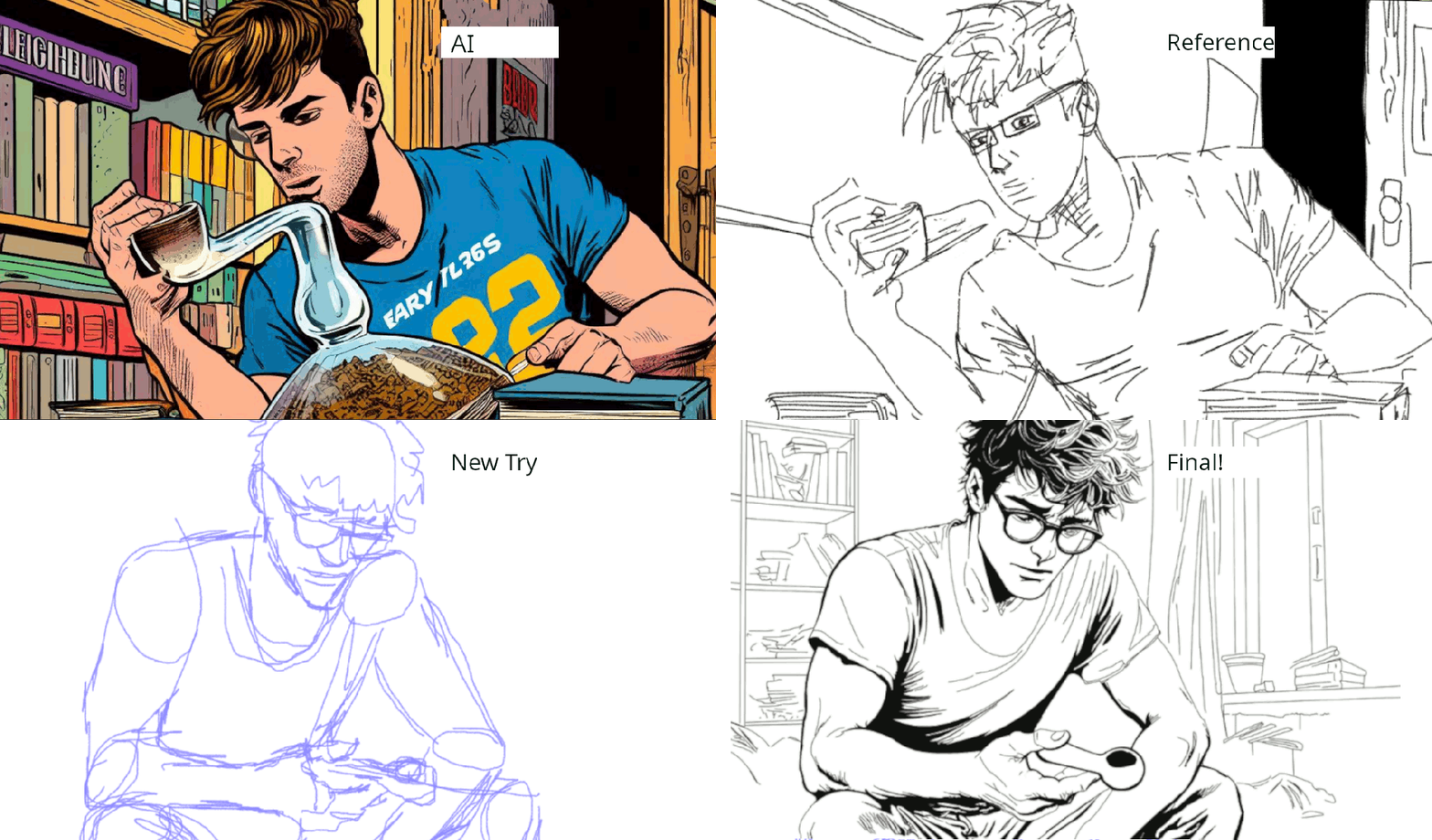
So I Frankenstein’d things instead—mashing up photos of hands, poses, my own blurry selfies, and cobbled-together references in GIMP. I became my own weird little AI engine, and surprisingly, that worked better. Then I found the 3D pose models in Clip Studio Paint and that was an effective change to the game.
In the end everything became far superior when I abandoned AI altogether, I can’t say AI didn’t help though. Had I not been able to visualize what I wanted in the first place, even if it was incredibly not the vision I imagined, it gave me the much needed dopamine hit that sparked my interest back into the project in a more meaningful way. I could actually see progress that I’ve never been able to do from worldbuilding or writing. For all its faults, I will always have AI to thank in those beginning stages of the creative process.
A Blank Page to a Learned Skill
As of this writing, I’m on the penultimate page of Issue 1—literally the final panel. It’s taken me about three years to get here, spread across bursts of ambition and long lulls of burnout. That adds up to roughly 25 pages, which may not sound like a lot, but to me it’s Everest in a sketchbook. I’m not a trained artist. I don’t move fast. But I am making it. Slowly. Deliberately. Maybe even stubbornly.
Every page was a mini-crisis. Some panels took days. Others, weeks. Entire scenes were scrapped and rebuilt. Drawing is not intuitive to me—it’s a puzzle with missing pieces I have to hand-carve. There were plenty of times I hated what I’d drawn. But I always came back to fix it. Improve it. Or just angrily trace over it until it felt less offensive to my soul.
Along the way, I had to learn how to actually use Clip Studio Paint. That meant trial and error with brushes, figuring out which ones worked best for line art, shading, or textures. Eventually I discovered downloadable brushes—things like blood splashes, fire textures, or cool little nature details that saved me hours. Bit by bit, I got comfortable with layers. Then came the game-changer: masking. I only learned how masking worked halfway through the issue, but it instantly made everything cleaner and less destructive to tweak. It turns out Clip Studio has a ton of tools—like those glorious poseable 3D models—that might just save me enough time to survive this solo grind until I can eventually afford to hire an artist.
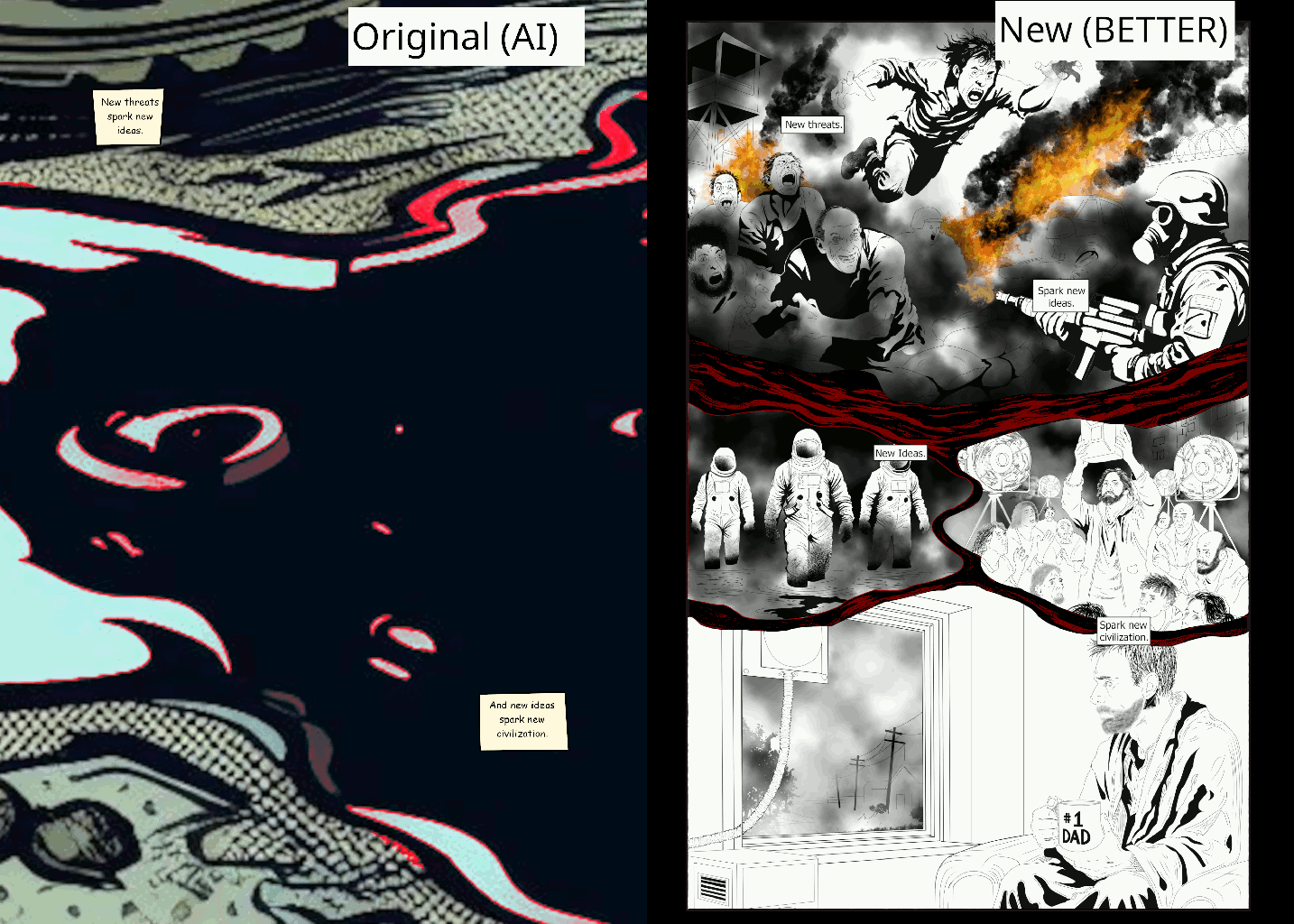
And things needed to change when I really thought about them. One page started as just a full-page shot of water with a bit of text describing the future. I thought it was artistic at the time—minimal, moody. But the more I looked at it, the more I realized it was just… boring. Worse, it landed smack in the middle of Damon’s climactic ending—an emotional crescendo that deserved more than a splashy body of water. Originally, the water was meant to represent both his death (it was red-tinted) and the transition to a sunset over Rose’s home city, Rigtown, which is situated on the water. There was thematic intent—but no impact.
Eventually I had the idea to turn the water into a reflection, one that shows a fragmented history of the world through subtle imagery. That completely transformed the page into something ambitious and layered—honestly, one of my favorite pages now. The imagery isn’t so subtle, but I like that it gives a glimpse at potential future arcs.
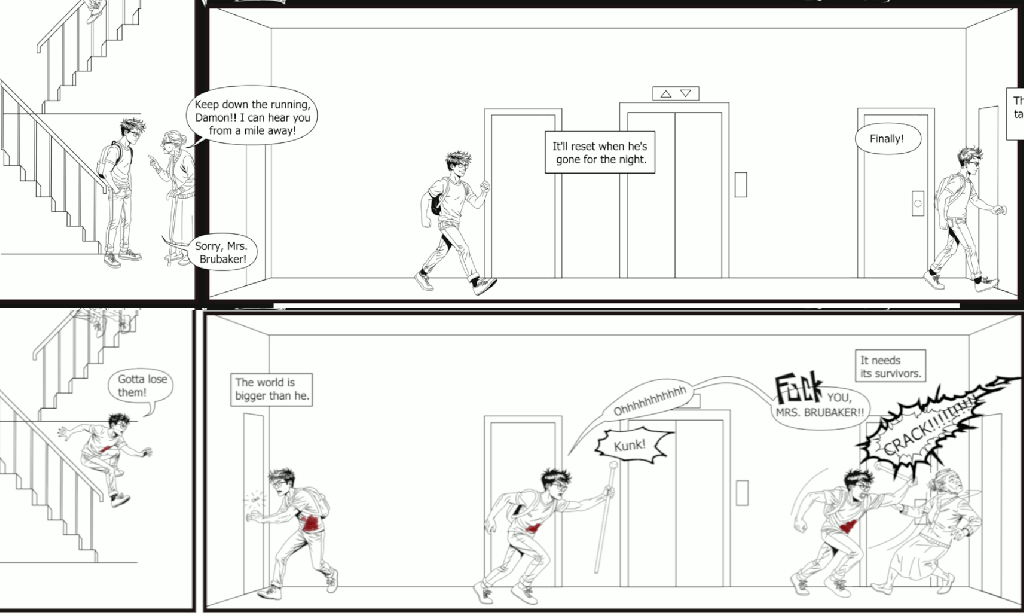
Some of the pages I had ideas for were perfect, but also more ambitious than I had imagined. The two two-page spreads in the issue took by far the most time. Both are these Wes Anderson-inspired dollhouse-style perspectives showing Damon’s apartment building. The first shows him moving through the building casually; the second, in chaos—he’s sprinting, panicked, hurt, chased by people corrupted by the mist. They’re dense, semi-single-panel montages that nearly broke me but also became neat little visual centerpieces. It also helps my want for a focus on setting. Damon’s home obviously isn’t going to be a large set piece (being only in this issue) but it shows that I am thinking about the setting in general.
I also spent a good chunk of time rethinking panel layouts. Early on, I relied too heavily on those AI-generated images I used as rough thumbnails. While helpful in some ways; they were janky and lacked cohesion—like a storyboard built from a drawer full of puzzle pieces from different boxes. Worse yet it boxed me into the idea that those were my panels as laid out, not thinking I could change them. As I drew, I started improving the paneling with more intention and momentum. By the end, things looked significantly more dynamic and thoughtful.
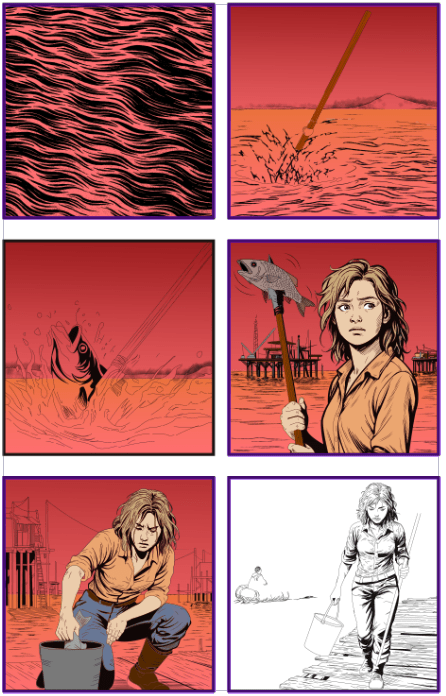
I even experimented on this second-to-last page by trying out flat coloring for the first time. And hey—it actually worked. But of course, it also added more time. For the future I hope to do things in order, but deciding to go for color sometimes might provide a nice break in the future when I’m fatigued from drawing so much.
Somewhere along the way, I decided that just one issue wasn’t enough. I wanted the entire first arc mapped out—seven issues in total—so I wrote them. And when I say “wrote,” I mean the words gushed out like water from a cracked pipe. I was so relieved to be typing instead of inking that I practically vibrated through the scripts. That momentum reminded me why I’m doing this: not for perfect pages, but for a story worth telling.
I even took time to outline the rest of the story beyond that. I think it’ll be about 11 or 12 arcs total, some short, some long. Arcs two and three are pretty fleshed out, and the rest are in rough outline form.
Post-Creation Pre-pre-Release Anxiety
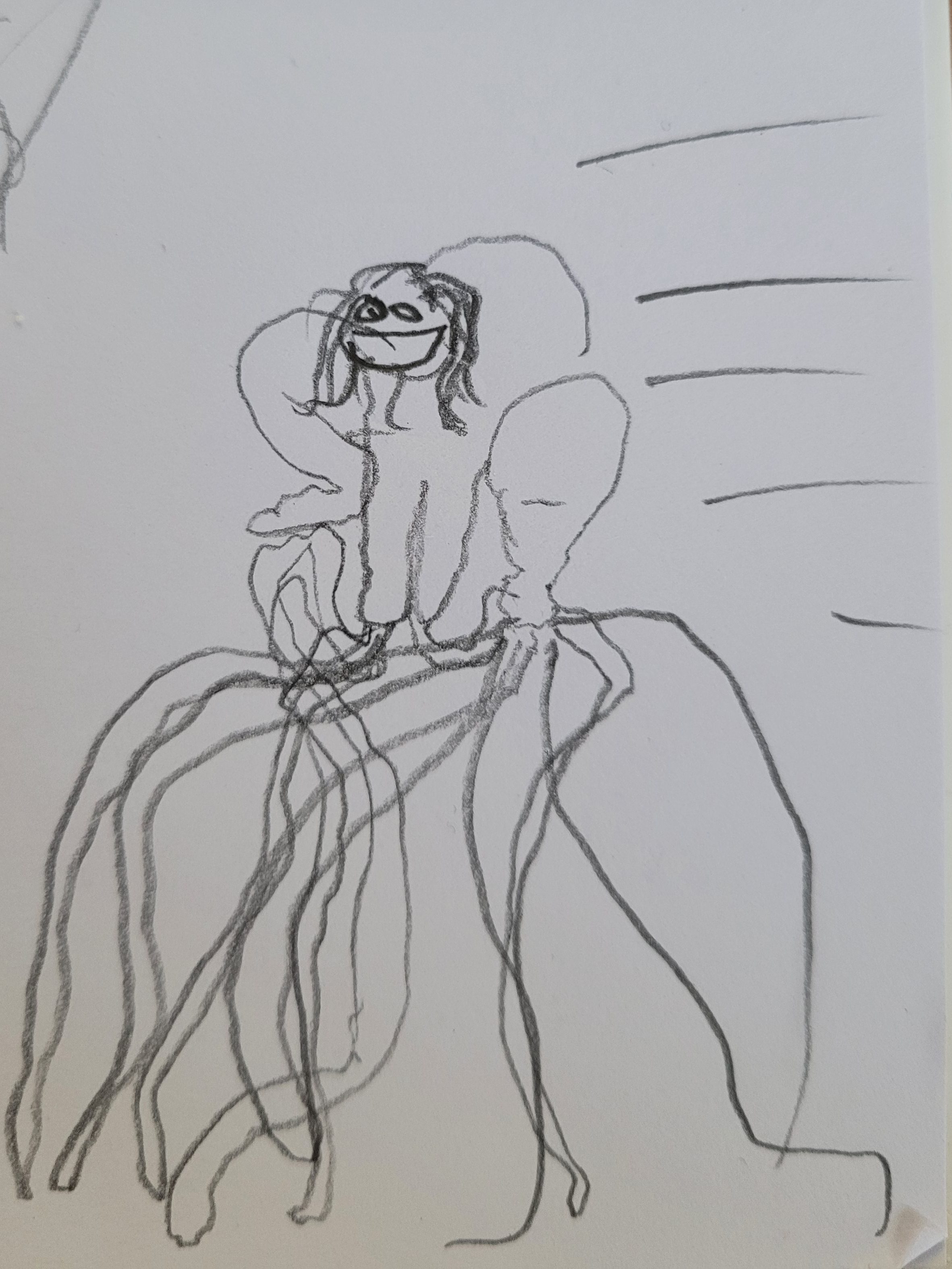
The finishing of coloring, for one—which I find way more enjoyable than drawing. But beyond that? I’m not sure.
I eventually need to figure out quite terrifying task of how to get it out and into people’s hands to deconstruct, enjoy, destroy, hate, love, and all of that. The thought is already raising my heartrate. The question is: how?
I could self-publish. Pros: control, no publisher timeline, and the ability to use any profits to fund future issues. Cons: no built-in audience, no regular release schedule, and my nonexistent social media presence. I don’t have a platform to launch from, and most successful indie comics these days start with a pre-existing fanbase. That’s not me.
The other option is to try for a publisher. They have distribution. Visibility. Credibility. But without an artist or a faster turnaround time, I’m not sure how realistic that is. I can’t promise a book every few months. I don’t want to draw this forever—I want to write and work with a partner who believes in this story as much as I do.
There are still a lot of unknowns. Do I release the first issue as a standalone to build interest? Or hold back until I can release the whole arc as a mini-series? Do I bite the bullet and try to raise funds for an artist now that I’ve proven I can finish something—or do I prove I can finish more without help first? The questions stack up. The options split like tree branches. But the story is real, and the world is built. That’s more than I’ve ever had before.
I’m proud of what I’ve built. And I want people to see it. All of it. But first, I have to finish these last two damned pages.

 Ginothy Tonic
Leave a comment